
Technical resource
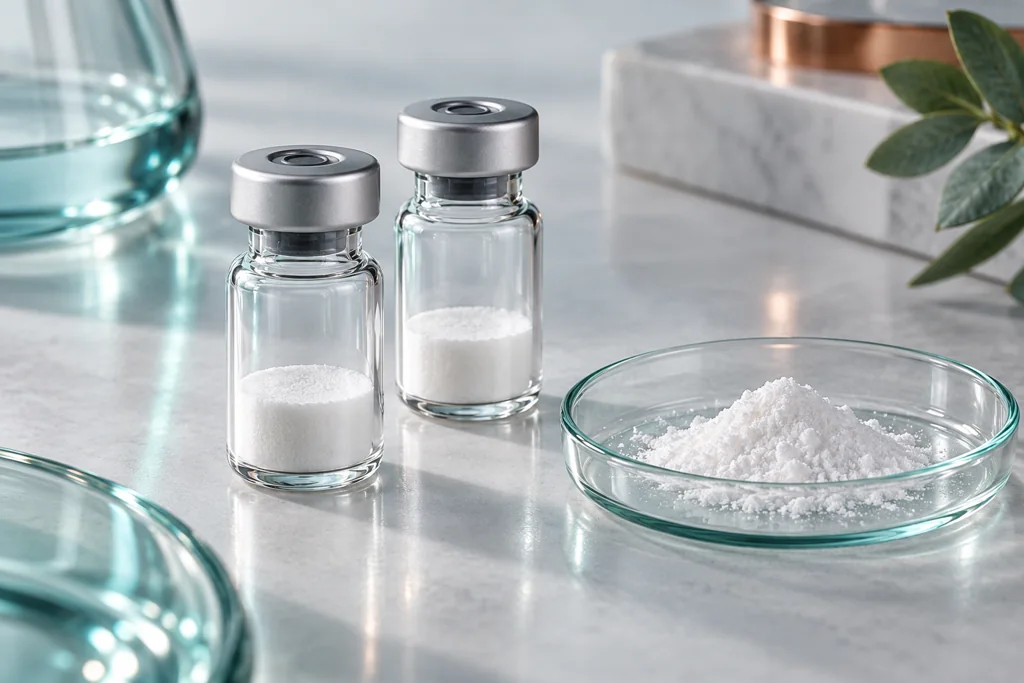
How to Store Lyophilized Cosmetic Peptides
Follow the product-specific label and TDS. Moisture control, a sealed container and an appropriate temperature history matter more than a universal storage rule.
Read guide →Freeze drying, formulation, quality documentation and sourcing — explained for better B2B decisions.
Follow the product-specific label and TDS. Moisture control, a sealed container and an appropriate temperature history matter more than a universal storage rule.
Read guide →
A COA reports batch results, a TDS describes technical use and specifications, and an SDS communicates hazards and handling information. Each serves a different review.
Read guide →A useful COA ties an identifiable batch to a specification, test methods and results. Check the complete report, not just the purity line.
Read guide →HPLC purity, net peptide content and total powder weight answer different questions. A sourcing specification should state the measurement method and calculation basis for each.
Read guide →
Freeze drying combines freezing, primary drying and secondary drying. A useful process is designed around the specific formulation and verified against defined quality targets.
Read guide →Freeze dried and lyophilized describe the same drying process. The useful comparison is the material specification: ingredient identity, peptide content, excipients and packaging.
Read guide →