
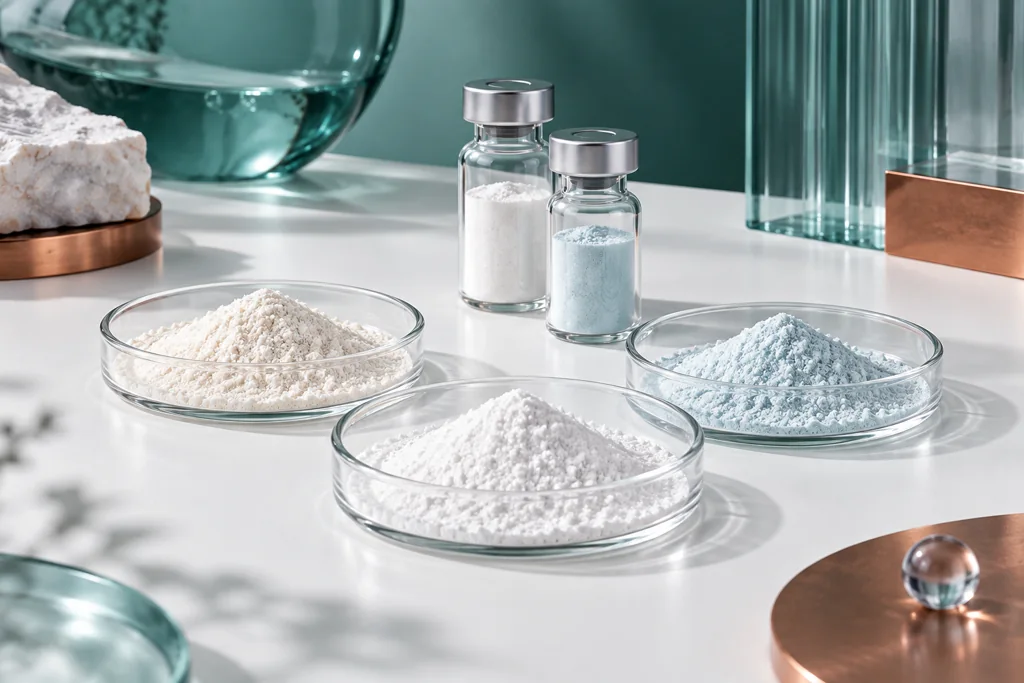
Quick answer: A custom blend starts with defined component identities and a testable cosmetic objective. Ratios, excipients and analytical methods must be considered together.
Set the objective and constraints
Explain the intended skincare product, target market, carrier system and appearance goals. State whether the project is a new concept or a revision of an established formula. Include ingredient restrictions and the packaging environment so the development brief reflects real product constraints.
Define each component
List the exact peptide names and intended content basis. Percentages can refer to a supplied solution, a raw powder or the final product, so label each clearly. The component ratios should be documented rather than inferred from a total blend weight or a marketing name.
Plan how the blend will be assessed
Ask how identity and relevant content will be evaluated when several components are present together. Review whether the agreed analytical method can distinguish the ingredients of interest. Physical appearance, dissolution and stability checks should be appropriate to the blend and its intended use.
Approve changes deliberately
Keep an approved composition revision linked to the sample and packaging. If a component, carrier or fill format changes, identify which assessments need to be repeated. A clear change record makes a multi-peptide OEM project easier to reproduce and compare across future orders.
Move the project forward
Use this guide to frame a cosmetic formulation or procurement brief. Review the product collection, document requirements and OEM workflow. For a specification review, contact Hytanbio.
Related reading

Freeze-Dried vs Lyophilized Peptide Powder
Freeze dried and lyophilized describe the same drying process. The useful comparison is the material specification: ingredient identity, peptide content, excipients and packaging.
Read guide →How Cosmetic Peptide Freeze Drying Works
Freeze drying combines freezing, primary drying and secondary drying. A useful process is designed around the specific formulation and verified against defined quality targets.
Read guide →
Peptide Purity vs Peptide Content: Read Both
HPLC purity, net peptide content and total powder weight answer different questions. A sourcing specification should state the measurement method and calculation basis for each.
Read guide →