
Content reviewed · Sources & review policy
Quick answer: Choose the format around handling, evaluation needs and the finished product plan. Bulk packs and private-label kits solve different sourcing problems.
Should I order bulk peptide powder, individual vials or a kit?
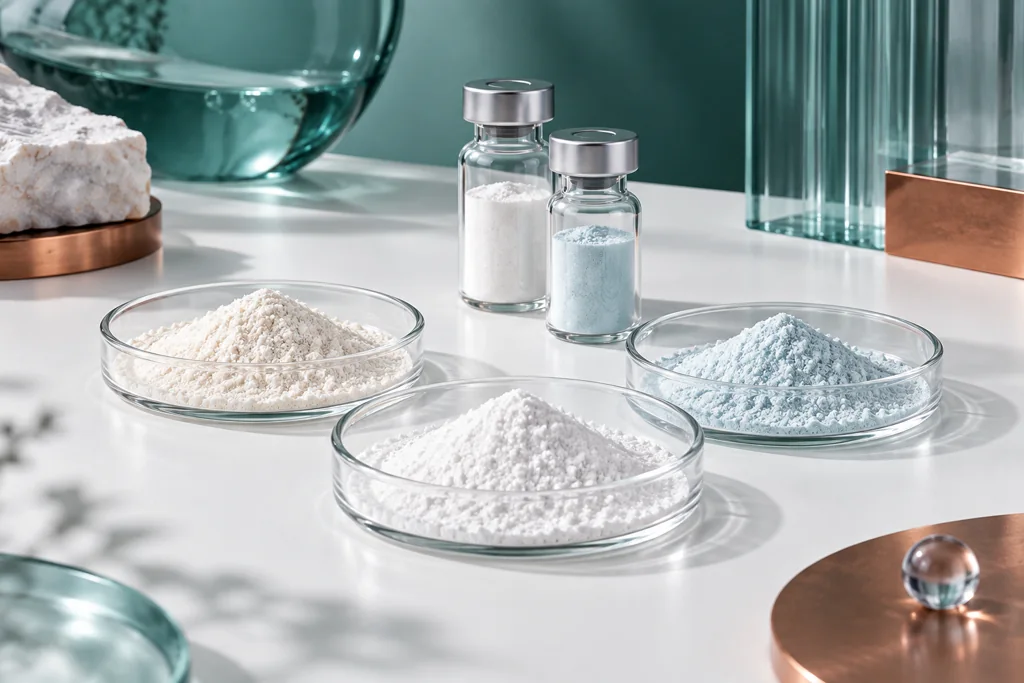
Bulk cosmetic peptide powder can suit a manufacturer incorporating an ingredient into a larger batch. The useful pack size depends on the actual weighing and handling workflow. Consider how often the container will be opened, the required measuring accuracy and the storage arrangements.
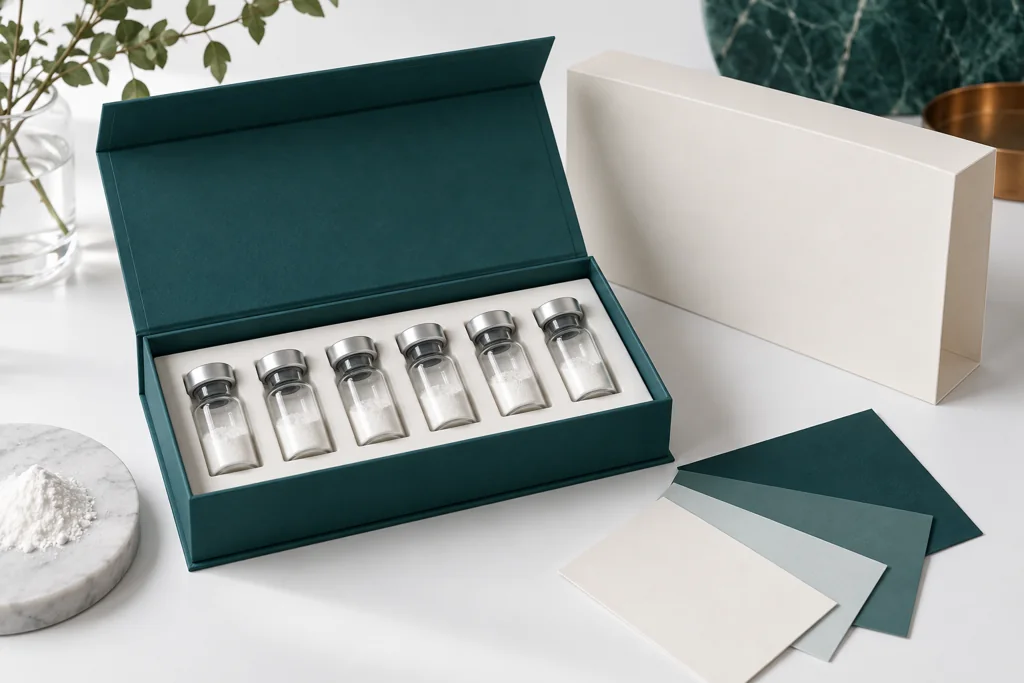
Individual vials can make sample distribution and defined-quantity handling more convenient. The fill still needs a clear content basis and tolerance. A small vial is not automatically a finished cosmetic, and its appearance does not imply a particular application or quality grade.
Choose the format from your handling and production workflow. Bulk material can suit a central weighing process, whereas smaller units can support distributed sample evaluation or a defined single-use presentation. Neither is automatically the cheaper usable option. Count the time spent opening, weighing, transferring and documenting material, then compare that workflow with the controls required for a prefilled format.
How should I compare the total cost of different pack formats?
A kit adds presentation, component pairing and instructions to the underlying material. It introduces additional decisions about artwork, assembly, compatibility and traceability. Specify the complete bill of materials so that price and lead-time comparisons include the same pack components.
Include filling, packaging, testing, artwork, transport and handling waste when comparing options. The lowest raw-material unit price may not produce the best operational result. Discuss both your first evaluation order and the repeat-order forecast before settling on a format.
Illustrative comparison: ten 10 mg units and one 100 mg pack have the same nominal gross quantity, but different container counts and handling steps. They are not equivalent if the composition or content basis differs. Request separate material, filling, packaging, testing and transport lines so the commercial decision reflects what your team will actually receive and use.
Parameters to record
- Quantity: compare equivalent composition and content basis
- Workflow: weighing, handling frequency and record keeping
- Cost: material, filling, packaging, testing and transport
Frequently asked questions
Are ten 10 mg vials always equivalent to one 100 mg pack?
Only in nominal gross quantity; composition, content and packaging must also match.
Does a kit always include a diluent?
No. Every companion component must be explicitly listed in the agreed kit specification.
Related reading
Developing a Custom Multi-Peptide Freeze-Dried Blend
A custom blend starts with defined component identities and a testable cosmetic objective. Ratios, excipients and analytical methods must be considered together.
Read guide →Private-Label Peptide Vials: A Project Checklist
A private-label vial project needs more than a logo and a fill weight. Define composition, peptide content, container, closure, artwork and release documentation.
Read guide →How to Write a Cosmetic Peptide OEM Project Brief
A concise brief should define the product concept, exact ingredient or blend, content, format, quantity, destination and approval requirements.
Read guide →