
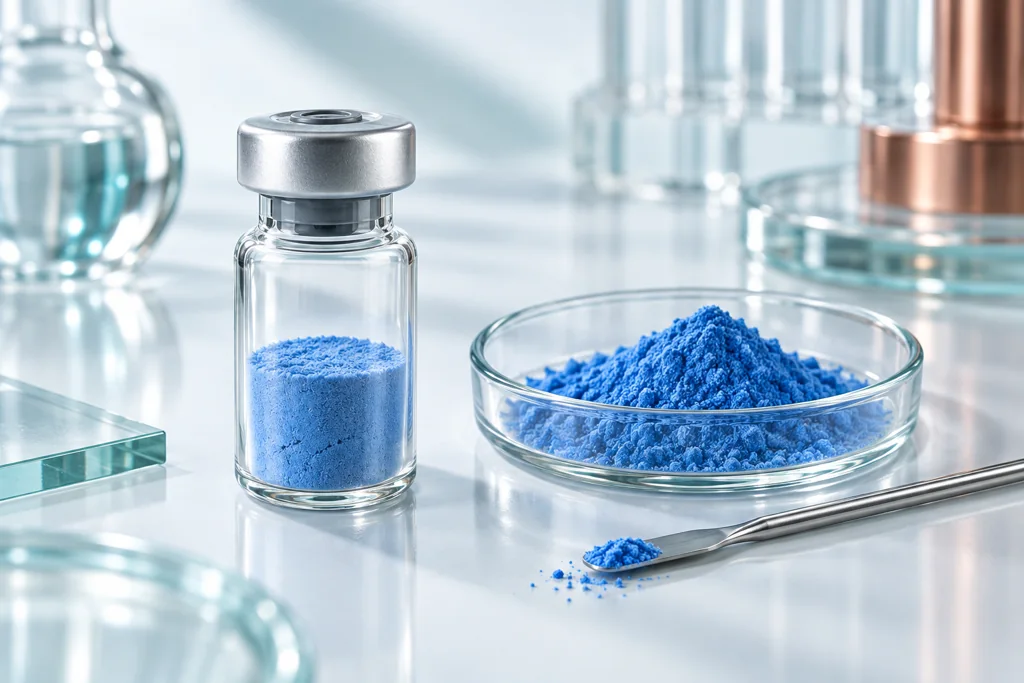
Quick answer: Source GHK-Cu by its exact copper-peptide identity, analytical specification and intended cosmetic use. Blue colour alone is not a quality test.
Align the names on the enquiry
Buyers may search for GHK-Cu, copper peptide GHK or Copper Tripeptide-1. Use the full supplier specification to confirm the intended complex and avoid substituting a different copper peptide. GHK without copper and AHK-Cu should be reviewed as different identities.
Ask for more than a photograph
A blue powder image helps communicate the ingredient concept but cannot verify composition, purity or peptide content. Ask which analytical methods confirm identity and which acceptance criteria control the batch. Clarify whether the requested vial contains the raw ingredient or a cosmetic blend.
Consider the complete cosmetic base
Discuss colour contribution and ingredient compatibility in the intended serum or cream. The performance of a copper-peptide concept depends on the complete formulation and packaging, not just the presence of the ingredient name. Use a sample plan that reflects the actual product you intend to make.
Build a quotation-ready brief
Include identity, quantity, target content, bulk or vial format, destination and required analytical documents. If a reference sample is available, provide its specification rather than asking a supplier to match its colour. Agree how the supplied batch will be evaluated before commercial approval.
Move the project forward
Use this guide to frame a cosmetic formulation or procurement brief. Review the product collection, document requirements and OEM workflow. For a specification review, contact Hytanbio.
Related reading

Freeze-Dried vs Lyophilized Peptide Powder
Freeze dried and lyophilized describe the same drying process. The useful comparison is the material specification: ingredient identity, peptide content, excipients and packaging.
Read guide →How Cosmetic Peptide Freeze Drying Works
Freeze drying combines freezing, primary drying and secondary drying. A useful process is designed around the specific formulation and verified against defined quality targets.
Read guide →
Peptide Purity vs Peptide Content: Read Both
HPLC purity, net peptide content and total powder weight answer different questions. A sourcing specification should state the measurement method and calculation basis for each.
Read guide →