
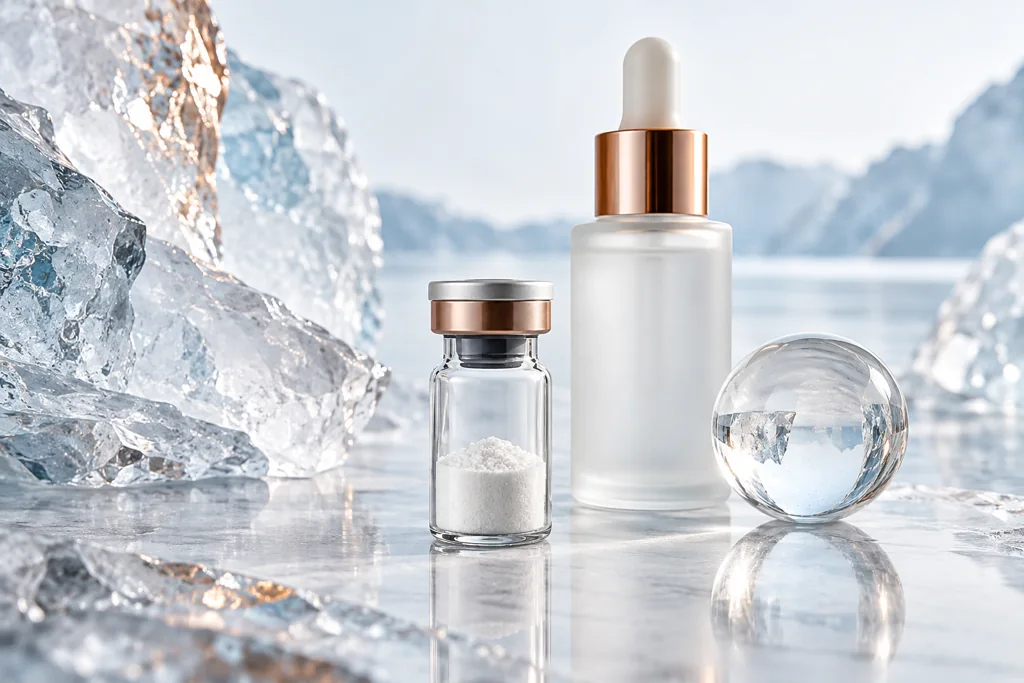
Quick answer: The product format shapes the formulation and evidence requirements. A peptide suitable for one concept should not be assumed suitable for every application.
Serum and cream projects
A serum and an emulsion can place an ingredient in different environments. A topical peptide brief should describe the intended base, processing exposure, target pH and packaging. If a freeze dried peptide vial is part of the concept, define how it relates to the final cosmetic preparation and the evaluation plan.
Eye-area and lash concepts
Eye-area products and eyelash peptide enquiries need a particularly clear use description and appropriate product assessment. Ingredient familiarity from a facial serum does not establish suitability for use near the eye. The responsible formulation team should evaluate the complete product and intended exposure.
Lip and body formats
A lip peptide or body peptide concept introduces its own application area, sensory objectives and packaging constraints. State whether the ingredient is being evaluated in a balm, cream, lotion or another format. Content, dispersion and stability should be assessed in the actual formulation rather than copied from an unrelated prototype.
Scalp and appearance claims
Hair growth peptide, anti acne peptide and skin whitening peptide are broad search terms that can extend beyond a simple cosmetic ingredient description. Treat these as requests needing clarification of the intended product and claims. This site does not use those terms as promises of outcomes from a supplied raw powder.
Build an application-specific brief
Identify the body area, product format, intended cosmetic objective and conditions of use. Ask which ingredient data are available and what additional finished-product evaluation is needed. A precise application brief helps keep the specification, safety assessment and marketing wording aligned.
Move the project forward
Use this guide to frame a cosmetic formulation or procurement brief. Review the product collection, document requirements and OEM workflow. For a specification review, contact Hytanbio.
Related reading

Freeze-Dried vs Lyophilized Peptide Powder
Freeze dried and lyophilized describe the same drying process. The useful comparison is the material specification: ingredient identity, peptide content, excipients and packaging.
Read guide →How Cosmetic Peptide Freeze Drying Works
Freeze drying combines freezing, primary drying and secondary drying. A useful process is designed around the specific formulation and verified against defined quality targets.
Read guide →
Peptide Purity vs Peptide Content: Read Both
HPLC purity, net peptide content and total powder weight answer different questions. A sourcing specification should state the measurement method and calculation basis for each.
Read guide →