
Content reviewed · Sources & review policy
Agree a change-notification process while the material is being qualified. A later shipment can carry the same commercial name while its salt form, analytical method, carrier or packaging has changed. The purchase record needs enough detail to show which version was approved.
Which supplier changes need a documented review?
Define notification triggers around the attributes used to approve the material. For a cosmetic peptide powder, these can include declared composition, salt form, test methods, manufacturing location and the contact packaging. A change to a specification limit also needs visibility, even if the supplier says the material itself is unchanged. Identify who receives notices and who can approve them.
The practical aim is to preserve the link between a qualification decision and subsequent orders. A sample approved under one specification should not silently become the evidence for a different version. Agree which changes require notification before implementation, what information must accompany a notice and how urgent exceptions are handled. Set the timing in the quality or purchasing agreement; there is no universal notice period established here. Procurement should be able to identify a held revision without having to infer its status from several email threads.
Examples of notification triggers
- Change in peptide identity, salt form, carrier or declared composition.
- Revised analytical method, reporting basis or acceptance limit.
- New manufacturing or testing site where relevant to qualification.
- Changed container, closure, liner or inner bag.
What belongs in a change-impact record?
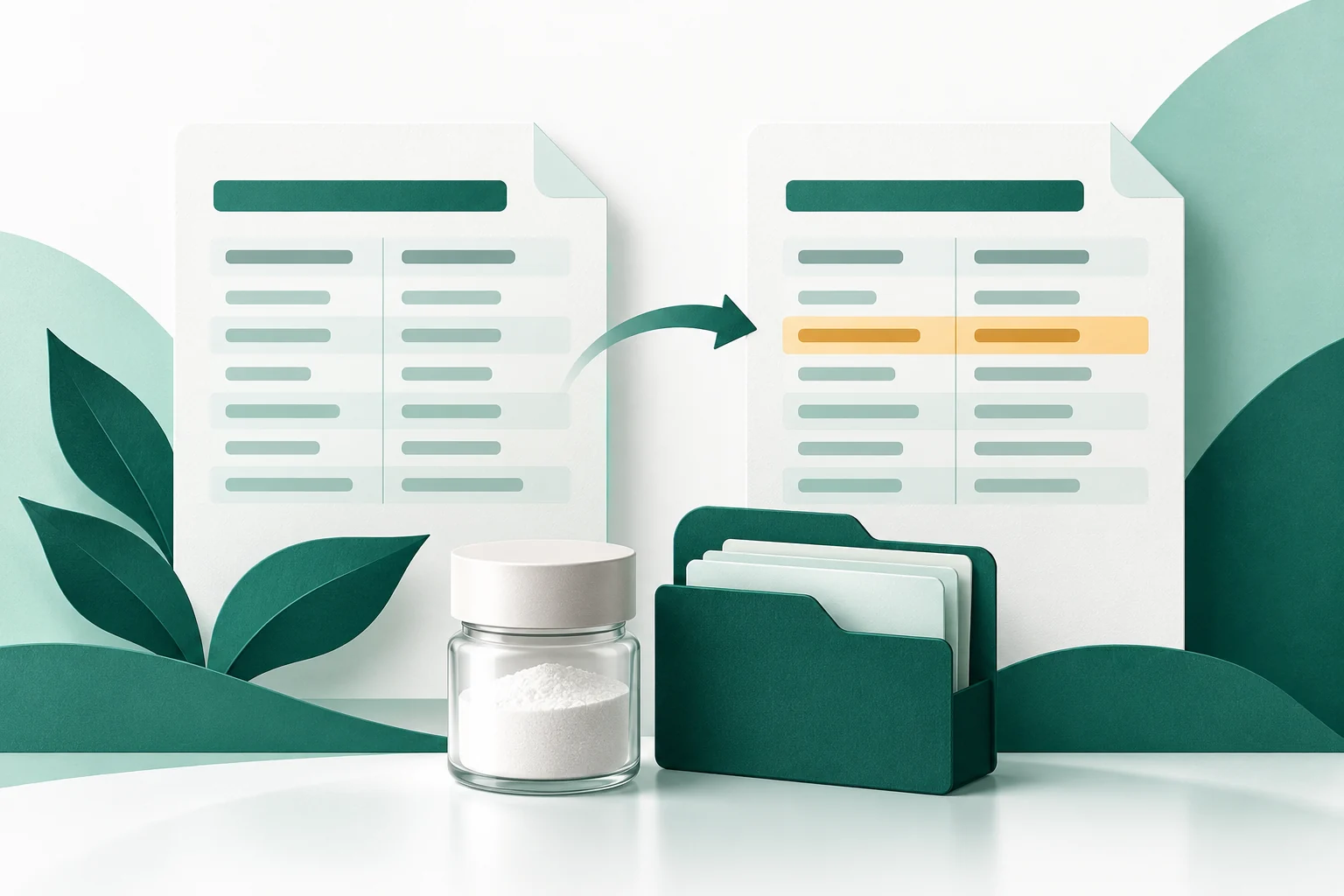
Use a record that compares the approved state with the proposed state and assigns a decision owner. Start with exact material codes, specification revisions and the first expected affected lot. Then describe the change in plain language and identify the evidence that may no longer apply. Avoid accepting a statement such as quality unchanged without knowing what was compared.
ISO 22716:2007’s public scope covers quality aspects of cosmetic production, control, storage and shipment. It provides context for disciplined quality records, but its public summary is not a clause-by-clause change-control procedure and does not certify a raw-material supplier. The workflow suggested here is a purchasing recommendation. Tailor it to the contract and the finished-product responsibilities. Keep supplier facts, proposed actions and your acceptance decision distinguishable so later investigators can tell what was known when the revision was released.
Suggested record fields
- Change identifier, date and supplier contact.
- Old versus proposed state, with document references.
- Affected products, lots and inventory.
- Evidence requested, reviewer and unresolved items.
- Decision, conditions and effective date.
How much comparison evidence is enough?
Choose evidence according to what changed and what the original approval relied on. A revised report layout may need a document check. A changed salt form or contact material may affect the basis for formulation or stability work. Decide the comparison question first, then ask for records or testing that can answer it. There is no fixed number of comparison batches that makes every change acceptable.
The ISO/TR 18811:2018 public scope explains why cosmetic stability protocols require product-specific justification. That principle helps avoid copying an unrelated schedule into a supplier change review. Separately, Bachem’s FAQ notes that peptide content and impurity profiles can vary between batches even when production protocols remain unchanged. A numerical difference alone therefore does not identify its cause. Compare results on compatible methods and bases, and document whether the evidence supports the particular change under consideration.
Questions for the reviewer
- Which earlier qualification result could this change affect?
- Are the old and new analytical results comparable?
- What evidence supports the proposed conclusion?
- What limitation or follow-up remains after approval?
How do you control the first delivery after a change?
Link the approval to the first affected lot and check that the delivered documents identify the accepted revision. Keep old and new stock distinguishable where the difference matters to use or traceability. If a supplier ships before the review is complete, record the hold or disposition under the agreed process instead of allowing receipt to imply approval.
Consider a hypothetical liner replacement: the supplier retains the powder code but changes the cap-liner material. Your record should connect the new component reference, the compatibility assessment decision and the first packaged lot. This is an example of traceability, not a claim that a liner change always causes a defect. After release, retain the superseded specification alongside the new version with clear status labels. For the next order, purchasing should reference the active specification explicitly, while complaint investigations remain able to reconstruct what was supplied under the earlier version.
Close the record with evidence
- Approved revision and first affected batch or shipment.
- Disposition of old stock and any held deliveries.
- Final reports and supplier confirmations.
- Updated ordering reference and named approval owner.
Frequently asked questions
Does a new batch automatically require a change-control review?
Routine batch variation and an intentional supplier change are different issues. Review batch acceptance against the specification, and use the agreed change process when a defined change trigger occurs.
Is there a universal 30-day or 90-day notice requirement?
No universal period is established in this article. Agree notice timing and exceptions in the relevant quality or purchasing agreement.
Can the supplier’s approval replace the buyer’s review?
The supplier’s evidence informs the decision. The buyer and the responsible finished-product team still need to assess the effect on their approved material and use.
Related reading

From Peptide Sample to Bulk Order: What to Verify
The approved sample should connect to a documented specification and acceptance plan. A pleasant sample experience alone does not define a repeatable commercial supply.
Read guide →COA, TDS and SDS: Which Peptide Documents Do You Need?
A COA reports batch results, a TDS describes technical use and specifications, and an SDS communicates hazards and handling information. Each serves a different review.
Read guide →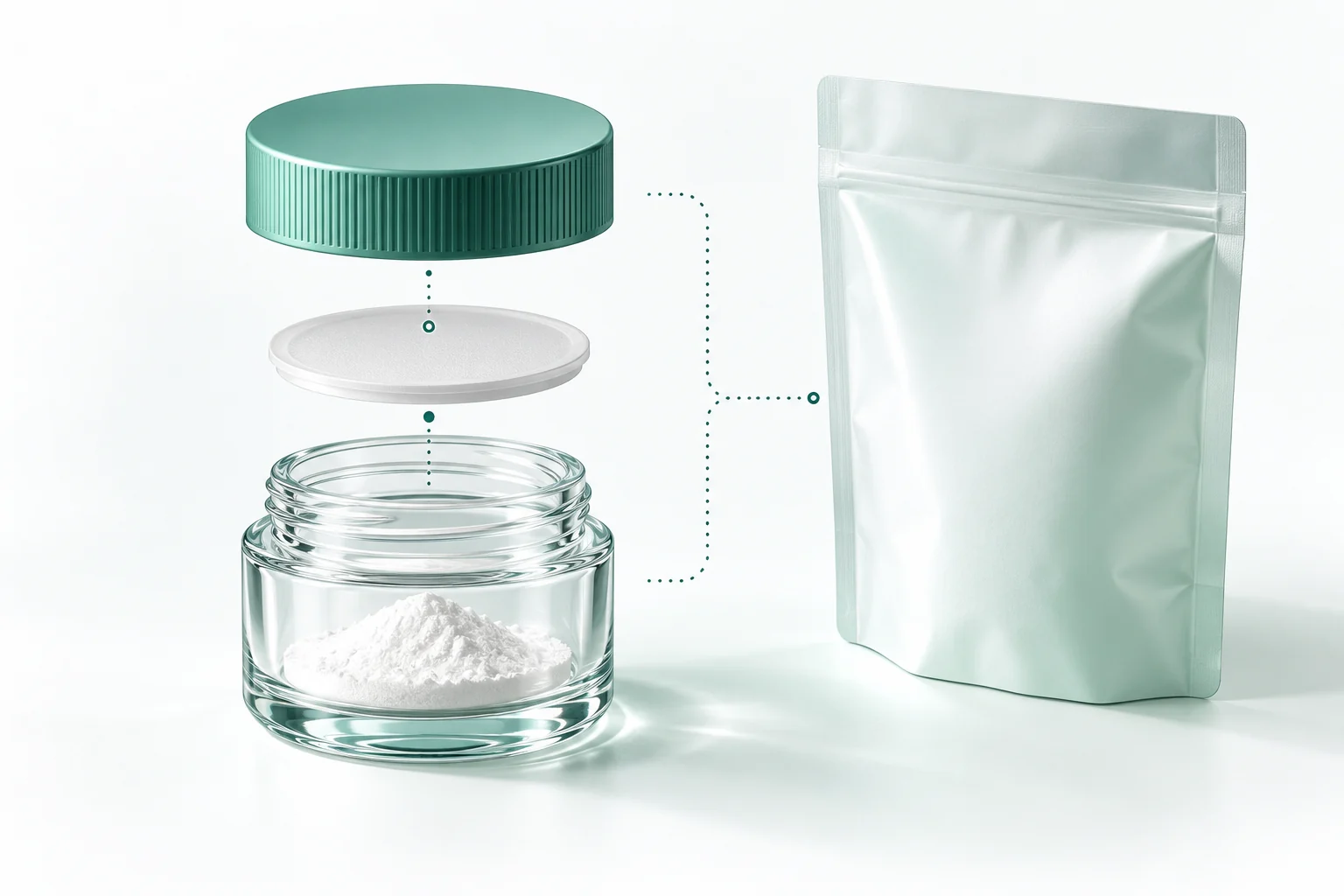
Packaging compatibility for cosmetic peptide powder: jar, liner and closure
Review the complete peptide powder pack, from contact materials to closure changes, and distinguish supplier declarations from product-specific compatibility evidence.
Read guide →